
7 ways a workshop reduces employee fatigue in Metro East firms
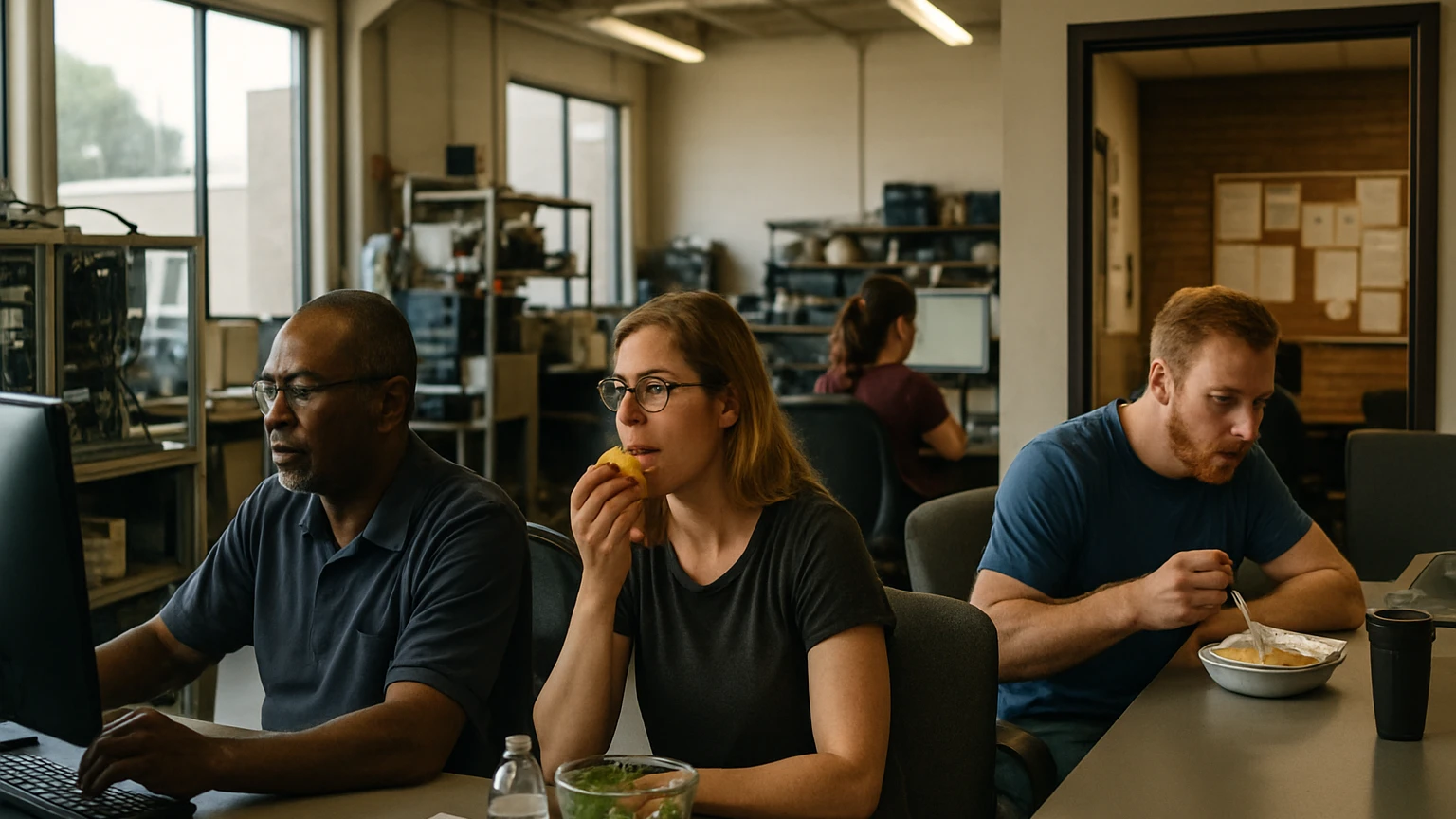
Your manufacturing floor supervisor tells you the second shift is making more mistakes after lunch. Your law firm partner mentions associates are missing details in client briefs after 2 p.m. Your HR director reports higher turnover among employees who work past 3 p.m. These are not attitude problems. These are energy problems with documented operational costs. Fatigue-related productivity losses cost employers approximately $2,000 per employee annually, and most Metro East decision-makers address the symptom instead of the input.
A workshop reduces employee fatigue by teaching employees how meal timing affects afternoon energy
Employees experiencing fatigue show slower reaction times, reduced focus, and diminished problem-solving skills. A one-hour High Energy Workdays workshop teaches your team the mechanism: how meal timing and food composition drive blood sugar stability or instability throughout the workday. Employees learn to identify which lunch choices create the 2 p.m. Crash and which choices sustain focus through the afternoon. The education is practical, measurable, and applied the same day. Your team leaves knowing how to structure meals to prevent the slump, not power through it with caffeine.
Nutrition education addresses the root cause fatigue management programs miss
Most fatigue management strategies focus on scheduling, break policies, and workload distribution. These matter. What they miss: the biochemical reality that skipped lunches and vending-machine afternoons create the energy deficit managers describe as low morale or burnout. Symptoms of fatigue include poor memory and lack of concentration, both of which adversely affect productivity. A Certified Nutritional Therapy Practitioner walks your team through the specific foods and timing patterns that prevent fatigue before it reaches the afternoon work queue. The mechanism is measurable. Employees who apply the framework report sharper focus, fewer errors, and sustained energy past the traditional slump window.
Interactive workshop format drives higher retention than email wellness tips
Decision-makers across Edwardsville, Belleville, and Collinsville send newsletters on wellness topics. Employees delete them. A live interactive session creates immediate behavior change because employees ask questions specific to their workday constraints: how to eat when meetings run through lunch, what to keep at the desk when the cafeteria closes early, how to handle client dinners without the next-day energy crash. The Q&A portion of the workshop addresses the friction points generic advice ignores. Employees leave with a plan tailored to their actual schedule, not a PDF they bookmark and forget.
Workshops quantify the operational cost of tired employees
Employee fatigue increases mistakes, duplicate effort, and client-relationship strain. A well-structured workshop frames fatigue as a performance input your company can manage. Abigail Parker, Certified Nutritional Therapy Practitioner, presents the data: how afternoon fatigue drives delayed work, turnover costs, retraining expenses, and errors that damage profitability. The framing shifts wellness from a nice-to-have benefit to a line-item ROI conversation. Law firms see the connection between associate fatigue and missed contract details. Manufacturers see the connection between second-shift energy and production error rates. The workshop quantifies what was previously dismissed as soft skill development.
One-hour format delivers immediate takeaways without disrupting productivity
Sessions run 45 to 60 minutes during the regular lunch hour. Employees learn three energy frameworks: the meal-timing pattern that prevents crashes, the macronutrient balance that sustains focus, and the hydration threshold that most workday routines ignore. Each framework includes a specific action employees implement that afternoon. No multi-week program requirement. No homework. The format respects your team's time while delivering education they apply immediately. Metro East manufacturers and law firms report higher attendance for one-hour sessions than for multi-day wellness retreats that pull employees off the floor or out of billable hours.
Workshop outcomes scale into four-week programs when results warrant investment
A single workshop delivers measurable short-term gains: fewer afternoon errors, better client conversations, employees who report feeling more energized. When decision-makers see the operational impact, the four-week corporate wellness program becomes the natural next step. The program builds workplace habits from workshop awareness. Weekly check-ins reinforce the energy frameworks. Employees track energy patterns, adjust meal timing, and document productivity changes. The structured program supports law firms and manufacturers with 50 or more employees who need sustained behavior change, not one-time awareness.
Fatigue reduction improves retention among employees whose energy directly affects output
Tired employees delay work, make more mistakes, and strain client relationships. The pattern managers describe as poor attitude often starts with how and when employees eat during the workday. Employees who leave a workshop with tools to manage their own energy stay longer because they feel supported. Turnover costs include recruitment, onboarding, retraining, and lost institutional knowledge. A workshop that reduces fatigue by addressing the nutritional mechanism costs less than replacing a single mid-level employee. The ROI is documentable: fewer call-offs, lower retraining costs, stronger client relationships, and employees who stay because the company invested in their performance capacity.
Book a workshop for your team
Your Metro East employees are not lazy. They are tired because the workday structure and food choices create the conditions for fatigue. A one-hour High Energy Workdays workshop gives your team the education to prevent the slump, reduce errors, and sustain focus through the afternoon. If the 2 p.m. Crash is costing you mistakes, turnover, or strained client relationships, Book a workshop for your team.